Signs
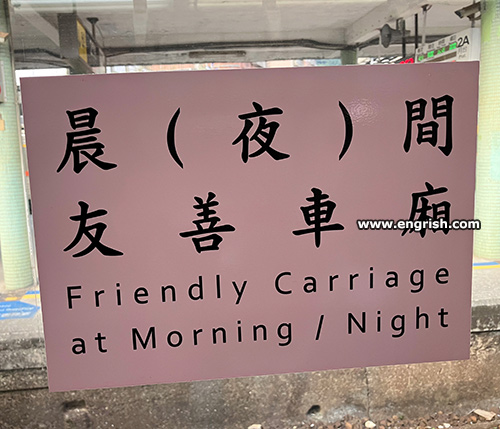
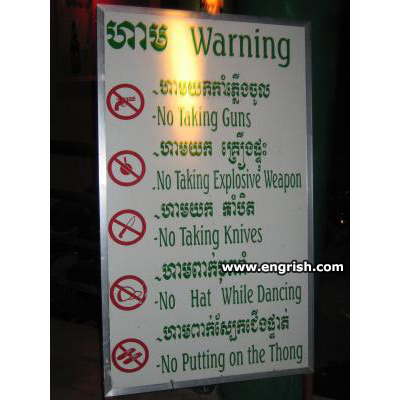
Signs and posters are some of the easiest places to find Engrish in Japan. Expect this category to grow even more as time goes by.
Filter Posts!
Sleeky spa water 100% favorable…
Why is this handle sticky!?
Drink probable…
I mean, we could if we wanted…
Photo courtesy of Mark Nelson.
Spotted in Tokyo.
How CasinosWelcomeBonus Explains Welcome Bonus Wagering Requirements in Canada
For Canadian players navigating the online casino landscape, welcome bonuses represent one of the most discussed — and most misunderstood — aspects of signing up at a new platform. The headline figures are easy to grasp: a casino offers to match a first deposit by 100%, up to a certain dollar amount, sometimes accompanied by a set of free spins. What receives far less attention, and causes considerably more frustration, is the wagering requirement attached to that offer. These requirements determine whether a bonus translates into real, withdrawable winnings or simply evaporates after a session of play. Understanding how they work, how they are calculated, and how Canadian-specific factors influence them is essential for any player making informed decisions about where to deposit.
What Wagering Requirements Actually Mean and How They Are Calculated
A wagering requirement — also referred to as a playthrough requirement — is a multiplier that specifies how many times a player must bet the bonus amount, the deposit amount, or both combined before any winnings derived from that bonus become eligible for withdrawal. The distinction between these three calculation methods matters enormously in practice. A 30x wagering requirement applied only to the bonus amount is a very different proposition from a 30x requirement applied to the combined deposit and bonus total.
To illustrate with concrete numbers: a Canadian player deposits CAD 100 and receives a 100% match bonus of CAD 100, giving a total balance of CAD 200. If the wagering requirement is 30x on the bonus only, the player must wager CAD 3,000 before withdrawing bonus-derived winnings. If the requirement applies to the deposit plus bonus combined, the total wagering obligation becomes CAD 6,000. This difference of CAD 3,000 in required betting volume is not a minor technicality — it materially changes the statistical likelihood of retaining any winnings by the time the requirement is fulfilled.
The mathematics underlying this become clearer when game contribution rates are factored in. Casinos do not allow all games to contribute equally toward clearing a wagering requirement. Slot games typically contribute 100%, meaning every dollar wagered counts in full. Table games such as blackjack, baccarat, and roulette frequently contribute between 10% and 25%, and in many cases are excluded entirely from wagering contributions. Video poker is similarly restricted at most platforms. The rationale is straightforward: games with a lower house edge and an element of player skill would allow a sufficiently experienced player to grind through a wagering requirement with minimal expected loss. By restricting contribution rates, casinos ensure that the expected value of the bonus remains within commercially viable parameters for the operator.
Time limits add a further layer of complexity. Most welcome bonuses in the Canadian market carry an expiry window of between seven and thirty days. If a player fails to complete the wagering requirement within that period, the bonus and any associated winnings are typically forfeited. This creates a practical tension: a player who wagers aggressively to meet the deadline increases their variance and overall exposure, while a player who paces themselves risks running out of time. Neither outcome is accidental from the operator’s perspective — the structure is deliberately designed to balance player engagement with controlled liability.
The Canadian Regulatory Context and Its Effect on Bonus Transparency
Canada’s regulatory environment for online gambling has historically been fragmented, with oversight divided between provincial authorities rather than governed by a single federal framework. This created a situation where offshore-licensed casinos could operate in a legal grey area for many years, accepting Canadian players without being subject to the consumer protection standards that apply in more tightly regulated markets such as the United Kingdom or Sweden.
The landscape began shifting meaningfully in 2022 when Ontario launched its regulated iGaming market under the auspices of iGaming Ontario, a subsidiary of the Alcohol and Gaming Commission of Ontario (AGCO). Operators wishing to legally accept players from Ontario were required to obtain a registration with iGaming Ontario and adhere to specific standards covering responsible gambling, advertising, and — critically — the clarity with which bonus terms are presented. The AGCO’s Registrar’s Standards for Internet Gaming, which took effect in April 2022, explicitly require that promotional terms be presented in a clear, prominent, and non-misleading manner. This includes wagering requirements, game restrictions, time limits, and maximum withdrawal caps associated with bonuses.
Outside Ontario, the regulatory picture remains less defined. Players in British Columbia, Quebec, and Manitoba have access to provincially operated online casinos through platforms such as PlayNow and Espace-jeux, but the majority of Canadians outside Ontario who play at privately operated online casinos are still doing so in a space where enforcement of bonus transparency standards is inconsistent. This is precisely why independent information resources have become valuable. Platforms such as https://www.casinos-welcome-bonus.com/ serve a practical function by aggregating and contextualizing the bonus terms that individual casino promotional pages often obscure in fine print, giving players a comparative baseline before they commit funds.
The Ontario model is being watched closely by other provinces. Alberta has been engaged in consultations about a regulated iGaming framework since at least 2023, and there is ongoing discussion in British Columbia about expanding the PlayNow platform’s competitive position. If additional provinces move toward regulation along Ontario’s lines, the pressure on operators to present wagering requirements more transparently will increase across the country. For now, players outside Ontario must rely more heavily on their own due diligence and third-party analysis to parse what a given welcome bonus actually entails.
How CasinosWelcomeBonus Approaches Wagering Requirement Analysis for Canadian Players
The challenge with evaluating welcome bonuses is that the headline offer — “200% up to CAD 1,000” — communicates almost nothing useful about the actual value of the promotion. Two bonuses with identical headline figures can have dramatically different effective values depending on their wagering requirements, game restrictions, maximum bet limits during bonus play, and withdrawal caps. A methodical approach to breaking down these components is what distinguishes genuinely useful bonus analysis from promotional content that simply restates what the casino’s marketing department has already published.
CasinosWelcomeBonus applies a structured framework to evaluating welcome bonuses in the Canadian market that begins with identifying the precise wagering requirement figure and the base to which it applies. This sounds elementary, but it requires reading through terms and conditions carefully, since operators do not always make this information easy to locate. The platform then calculates the total wagering obligation in dollar terms, using a standardized deposit example to allow meaningful comparison across different offers. A bonus with a 40x requirement on the bonus amount at a casino offering a 50% match is directly comparable to a bonus with a 25x requirement on the combined deposit and bonus at a casino offering a 100% match only when both are expressed in absolute wagering volume terms.
Beyond the raw wagering figures, the analysis extends to game contribution tables. A welcome bonus that appears generous but restricts wagering contributions to slots exclusively is a materially different product from one that allows table game play at full contribution. For players who prefer blackjack or roulette, a slot-only bonus is essentially unusable in practice — they would need to play games outside their preference and outside their strategic comfort zone to clear it. Identifying this restriction upfront prevents the common scenario where a player accepts a bonus, attempts to play their preferred games, and discovers too late that those games contribute nothing toward the requirement.
Maximum bet limits during bonus play are another area that receives detailed attention. Most casinos impose a cap on the maximum bet a player can place while a bonus is active — commonly set at CAD 5 per spin or per hand. Exceeding this limit, even inadvertently, typically results in the bonus being voided entirely, regardless of how much of the wagering requirement has already been completed. This is a term that casinos have every legal right to enforce and frequently do, yet it is buried in terms and conditions in a way that many players do not encounter until after a dispute has arisen. Surfacing this information clearly before a player deposits is a meaningful consumer service.
Withdrawal caps represent the final major variable. Some welcome bonuses cap the maximum amount a player can withdraw from bonus winnings — for example, limiting withdrawals to five times the bonus amount, regardless of how large the winnings become during the wagering process. For a player who receives a CAD 100 bonus with a 5x withdrawal cap, the maximum they can ever withdraw from that bonus is CAD 500, even if they run their balance up to CAD 2,000 during play. This cap fundamentally alters the risk-reward profile of the bonus and is essential information for any player evaluating whether to accept the offer.
Practical Strategies for Canadian Players Evaluating Welcome Bonuses
Given the complexity of wagering requirements, Canadian players are well served by approaching welcome bonuses with a degree of skepticism that the promotional framing does not encourage. The most useful mental reframe is to treat the wagering requirement not as a hurdle to be cleared but as a statistical cost to be estimated. Every time a player wagers money, the house edge of the game being played represents an expected loss. Across the volume of bets required to clear a wagering requirement, those expected losses accumulate into a concrete figure that represents the effective cost of the bonus.
A practical example: a player receives a CAD 200 bonus with a 35x wagering requirement on the bonus amount, generating a total wagering obligation of CAD 7,000. If the player clears this requirement exclusively through slot play with an average return-to-player (RTP) rate of 96% — meaning a house edge of 4% — the expected loss across CAD 7,000 in wagering is CAD 280. The player is statistically expected to lose more than the value of the bonus itself in the process of clearing it. This does not mean the bonus has no value — variance means some players will clear it profitably — but it does mean the expected value of the bonus, net of wagering costs, is negative. Players who understand this can make informed decisions about whether to accept a given offer or opt out.
Opting out of bonuses is a legitimate and often underappreciated choice. Many Canadian online casinos allow players to decline bonus offers at the point of deposit, or to contact customer support to have a bonus removed from their account before they begin playing. A player who prefers to deposit CAD 200 and withdraw freely without any wagering restrictions may be better served by declining the bonus entirely, particularly if their preferred games carry low house edges and they play with a degree of strategic discipline. The bonus is only advantageous when its statistical value exceeds its statistical cost, and that calculation depends heavily on individual playing habits and game preferences.
For players who do wish to pursue welcome bonuses, several practical principles improve the odds of a positive outcome. Choosing bonuses with lower wagering requirements — ideally below 30x on the bonus amount — reduces the total wagering exposure. Selecting casinos that allow table game contributions at meaningful rates extends the range of games that can be used to clear the requirement. Paying close attention to time limits and setting a realistic schedule for completing the wagering within the permitted window avoids the costly mistake of forfeiting a partially cleared bonus. And verifying the maximum bet limit before beginning play prevents accidental voiding of the bonus due to a single oversized wager.
It is also worth noting that the welcome bonus is not the only promotional mechanism available to Canadian players. Reload bonuses, cashback offers, and loyalty programs can provide ongoing value without the front-loaded wagering obligations of a welcome offer. Some players find that a modest welcome bonus at a casino with a strong ongoing promotions structure delivers more long-term value than a large headline welcome offer at a platform where subsequent promotions are sparse. Evaluating the full promotional ecosystem of a casino, rather than focusing exclusively on the signup offer, gives a more accurate picture of the total expected value over time.
Wagering requirements are not inherently predatory — they exist for commercially rational reasons and are a standard feature of the global online casino industry. What makes them problematic is opacity. When the terms are clearly disclosed, consistently applied, and easy to understand before a player commits funds, they represent a fair exchange: the casino provides bonus funds in exchange for a guaranteed volume of play. When the terms are buried, ambiguously worded, or selectively enforced, they become a mechanism for extracting deposits without delivering the value that was implied by the promotional offer. The distinction between these two scenarios is why clear, independent analysis of wagering requirements — rather than reliance on casino marketing materials — serves Canadian players meaningfully, and why resources dedicated to that analysis occupy a legitimate and useful role in the information ecosystem surrounding online gambling in Canada.
You can barely smell it…
Sure it looks dirty, that means it’s working…
Photo courtesy of Lowell Cunningham.
Gas station spotted in Korea.


(21 votes, average: 4.19 out of 5)
(20 votes, average: 4.50 out of 5)